Roof Repair vs Replacement: How to Know Which Your Roof Needs
When your roof is looking tired or has sustained damage, the choice between repair and replacement can be tough to judge. A leak, for example, could only be a sign of minor damage that can be easily repaired, or it could indicate more significant underlying issues.
Because the roof is such an integral part of the structure, making sure it’s safely maintained is crucial for protection from the elements. But as your roof puts up with all kinds of weather throughout the years, it’s not always easy to know the difference between repairing it and replacing the roof as a whole.
Of course, there’s a huge difference in which step you take, especially where money is concerned. So to help, we’ve put together the differences between repairing your roof and a replacement and the signs where each may be needed.
What causes roof damage?
Roof damage is mostly gradual, happening over time, or it can appear suddenly after severe weather. In most cases, problems start small before becoming much more noticeable later on.
For domestic properties, some of the most common causes of roof damage include:
- Storm damage
- Missing or slipped tiles
- Damaged flashing
- Blocked gutters
- Moss growth
- General wear and tear due to age
Some types of roofs are more prone to damage than others. Flat roofs, for example, can develop issues from standing water, poor drainage or damaged membranes, particularly if they haven’t been maintained over the years.
Commercial roofs can face additional strain due to their larger surface areas, regular foot traffic, as well as constant exposure to the elements.
A lot of the time, these are caused by one weak point rather than the entire roof failing. That’s why catching problems early is usually the best way to avoid more extensive damage later on.
Signs your roof may need repairing
Not every roofing issue means you need a full replacement. In many cases, the problem is isolated to one area and can be repaired before it develops into something more serious.
Repairs are often suitable for:
- Minor leaks
- Storm damage
- Isolated roofing issues
- Newer roofs in otherwise good condition
- Localised flat roof damage
- Water ingress caused by blocked gutters
Losing a few tiles after heavy winds may be a cause for concern, but repairing the affected section is often enough to restore the roof properly. The same applies to some flat roofing systems, like small splits, lifting edges or localised membrane damage. These can often be repaired without needing to replace the entire roof.
In such situations, using a trusted residential roofing contractor can be a big help. They can help identify the source of the problem and determine the most suitable repair.
What you don’t want to do is leave smaller roofing problems untreated. This can allow water to spread further into the structure, which could eventually lead to more expensive repairs later on.
When a roof replacement may be the better option
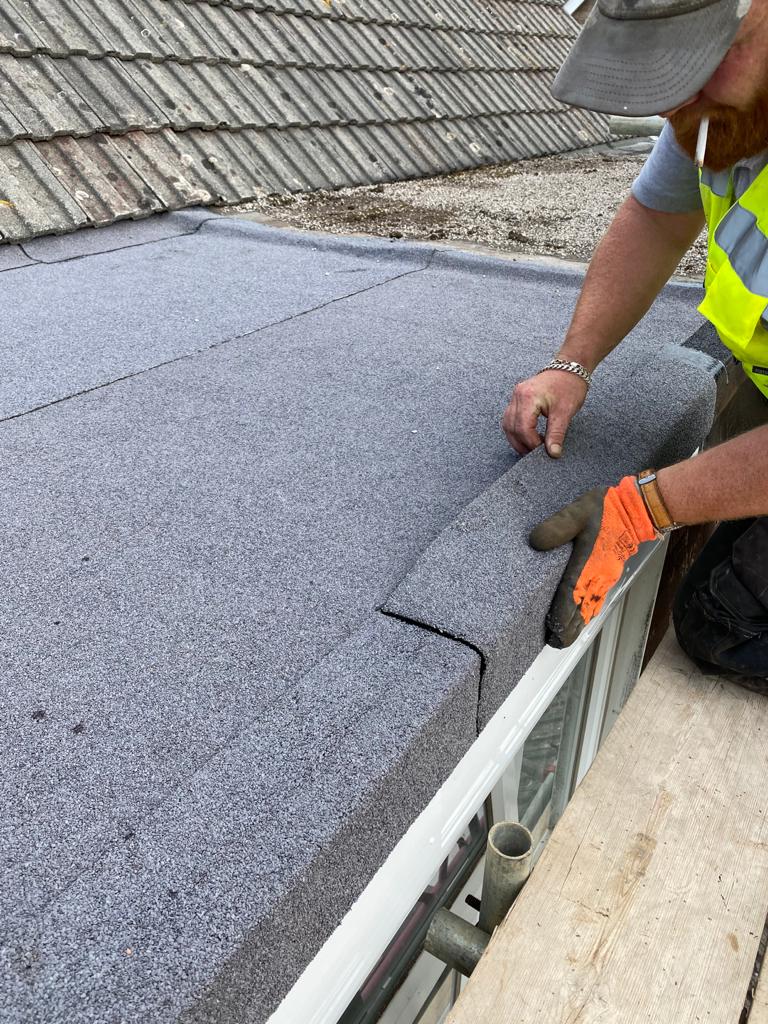
Sometimes repairs are no longer enough, especially if the roof is ageing or you find the same problems keep returning. While repairs can often extend the life of a roof, there comes a point where replacement becomes the more practical option.
We regularly see older flat roofs that have been patched several times over the years. While repairs may solve the issue short term, there often comes a point where replacement may save you money in the long run.
You may need to replace the roof if:
- Leaks are becoming frequent
- Large sections of the roof are failing
- Moisture has affected the roof structure
- Previous repairs are no longer holding
- There is widespread wear and deterioration
Age is also an important factor, as different roofing systems naturally have different lifespans depending on the materials used.
Roofing lifespans
| Roof Type | Approximate Lifespan |
|---|---|
| Felt Flat Roof | 15-25 years |
| GRP Flat Roof | 20-40 years |
| Concrete Tile Roof | 40-60 years |
| Slate Roof | 60-100+ years |
Roof repair vs replacement cost
We understand that for most property owners, cost is naturally one of the biggest deciding factors. And though fixing your roof may be costly, ignoring any issues could lead to even more expenses down the road and put your home and the people in it at risk.
Repairing the roof is usually the cheaper option upfront, especially if the issue is isolated to one section. If it’s just the case of replacing a few tiles or repairing damaged flashing, it will usually cost considerably less than replacing the entire roof.
However, repeated call-outs and emergency repairs can quickly add up if problems continue to return.
In some situations, constantly patching an ageing roof can end up costing more long-term than replacing it properly from the start. Ongoing leaks can also lead to internal damage affecting ceilings, insulation and even structural timbers.
The cheapest option initially is not always the most cost-effective solution over the lifespan of the roof. A professional inspection from Roof Care 365 can determine whether repairs are still worthwhile or if a replacement would offer better long-term value.
Commercial roof repairs & maintenance
Commercial and industrial roofs often require a different approach compared to domestic properties. Because these buildings usually have much larger roof areas, even small roofing issues can quickly become expensive if they’re left unresolved.
Commercial roof maintenance is important for:
- Warehouses
- Retail units
- Schools
- Factories
- Offices
- Industrial buildings
Problems such as standing water, damaged box guttering, and drainage issues can all lead to larger structural problems if ignored for too long.
Regular commercial roof maintenance helps identify smaller issues before they become major repair jobs. In many cases, planned inspections and repairs can significantly extend the lifespan of a roofing system.
For industrial roofs, we recommend getting an inspection after an instance of severe weather, long-term exposure to the elements or if you have ageing roofing materials.
Can a flat roof be repaired?
Yes, many flat roofs can be repaired depending on the extent of the damage and the condition of the existing system.
One of the biggest problems with flat roofs is poor drainage. Even though flat roofs are built with a slight fall, standing water can still develop if drainage systems become blocked or if the roof has started to sag over time.
When water sits on a roof for extended periods, it can gradually weaken joints and waterproof layers, eventually leading to leaks and internal damage.
Small splits, localised leaks and damaged sections can often be repaired without replacing the entire roof. GRP fibreglass roofing and other systems can all usually be repaired if the issue is caught early enough.
However, if water has spread underneath the membrane or the roof is showing widespread deterioration, replacing the roof may be the best option.
How can professional roof inspections help?
A professional roof inspection can often identify problems that are not immediately visible from ground level.
Issues such as trapped moisture, damaged membranes, deteriorating flashing and structural concerns are not always obvious until leaks begin appearing internally.
In many cases, the visible leak isn’t actually where the problem starts. Water can travel through the roof structure before appearing internally, which is why professional inspections are important when diagnosing roofing issues properly.
Drone roof surveys can also be used to provide a more detailed view of the roof’s condition. This technology allows inspectors to access hard-to-reach areas and evaluate the overall state of the roof without the need for ladders or scaffolding.
Emergency roof repairs
Storms, fallen branches and sudden leaks are just some instances that can cause unexpected roof damage that needs urgent attention.
Acting quickly is important, as water ingress can spread rapidly through a property and cause damage to ceilings, insulation and structural timbers. Temporary repairs can often make the roof safe and weatherproof until permanent work is carried out.
Unfortunately, rushed temporary repairs or poor roofing work can sometimes make issues worse over time, which is why using an experienced roof contractor is a must.
Roof Care 365 is available for emergency call-outs 7 days a week, 365 days a year across the South-West.
Roof repair & installation for Somerset & the South West

As an accredited roofing contractor, we provide professional roof repairs and installation across Somerset and the South West for both domestic and commercial properties.
Our team covers areas such as:
- Somerset – Taunton, Yeovil, Bridgwater, Weston-super-Mare, Wells, Frome, Wellington
- Bristol and surrounding areas
- Bath and North East Somerset
- Devon – Exeter, Tiverton, Barnstaple, Honiton, Plymouth
- Dorset – Dorchester, Weymouth, Christchurch, Poole
Whether it’s a small domestic leak or larger commercial roofing damage, our experienced team can identify the issue and make repairs where needed. We also provide ongoing commercial roof maintenance and emergency roofing repairs 7 days a week.
Contact us today by email ([email protected]) or by phone (01460 391018) to learn more about how we can help.
Roof repair FAQs
How do I know if my roof needs replacing?
Frequent leaks, widespread damage and recurring repair issues are usually signs that a roof may need replacing rather than repairing. If you’re not sure, please contact us about any issues you’ve noticed, and we’ll be happy to advise.
Is it cheaper to repair or replace a roof?
Repairs are usually cheaper upfront, but repeated repairs on an ageing roof can become more expensive over time compared to a full replacement. If your roof has suffered continuous damage, it may be cheaper to replace it fully.
Can a leaking roof be repaired?
Yes, many leaks can be repaired if the issue is identified early and the surrounding roof structure is still in good condition. As the UK is not a stranger to rain and adverse weather, lots of homes often require repairs.
How long should a roof last?
This depends on the roofing material used. Slate roofs can sometimes last over 100 years, while felt flat roofs may last around 15–25 years.
What happens if roof repairs are delayed?
Putting off repairs can allow water damage to spread further into the property. This can potentially affect areas such as insulation, ceilings and structural timbers.
How much do roof repairs cost in Somerset and the South West?
The cost depends on the type of roof, the extent of the damage and how accessible the affected area is. Smaller repairs are naturally much cheaper than larger structural work or full roof replacements.